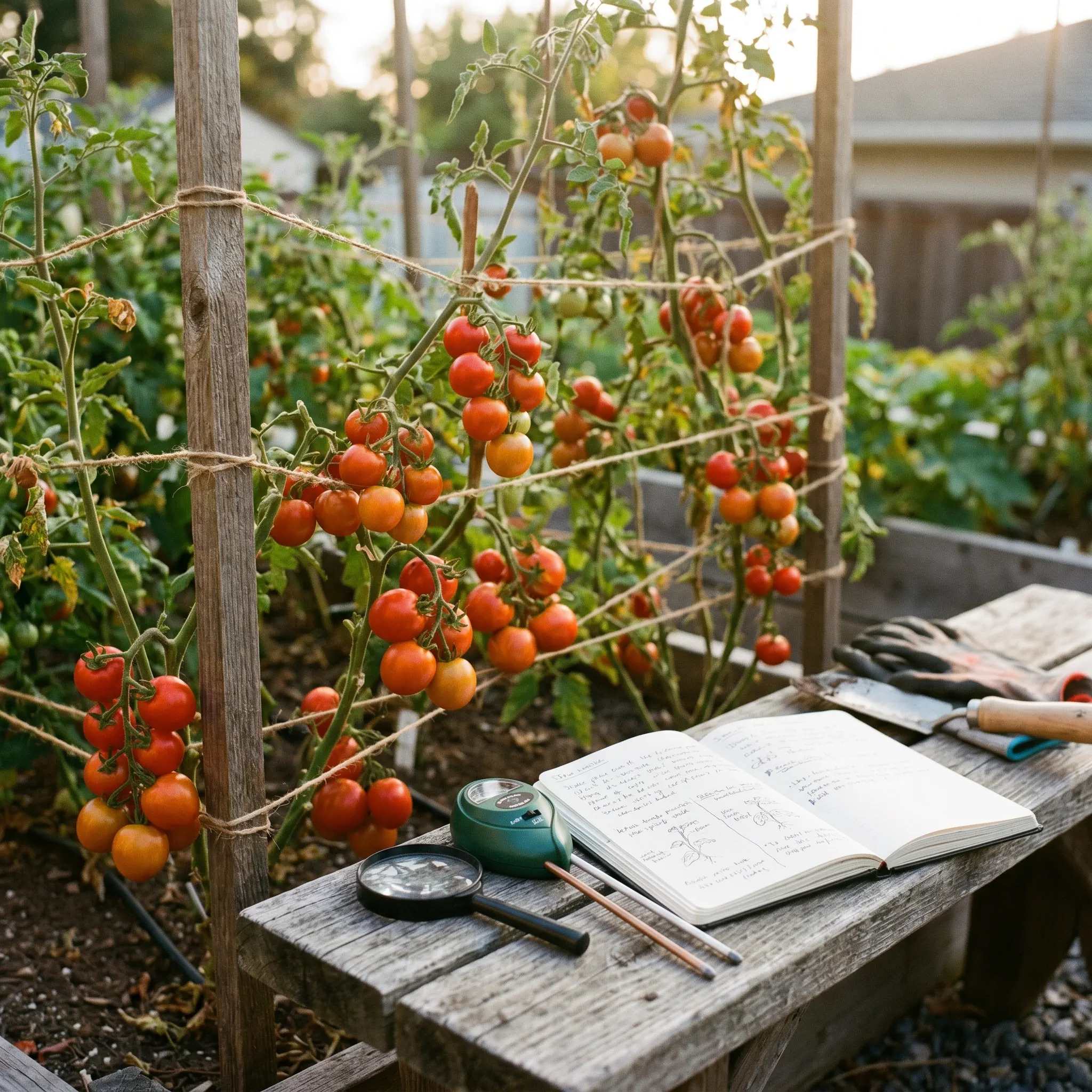
Observation method
Useful tomato notes connect the vine to the plate.
A field note should be able to answer a future question. If a tomato cracks, record whether rain came after dry soil. If flavor seems flat, record whether the fruit was picked at first blush or after full shoulder color. If sauce takes too long, record whether the variety was grown for slicing rather than paste. The note becomes useful when it connects cause, fruit behavior, and kitchen result.
Tomato Casa uses a modest rhythm: observe the plant, harvest with a purpose, taste before cooking, and write the result in plain language. The best entries are not long. They mention the date, weather pattern, variety, ripeness cue, texture, and what the tomato did in the kitchen. After a few weeks, the pattern is clearer than memory.