Kitchen use
Cook tomatoes according to water, skin, acid, and time.
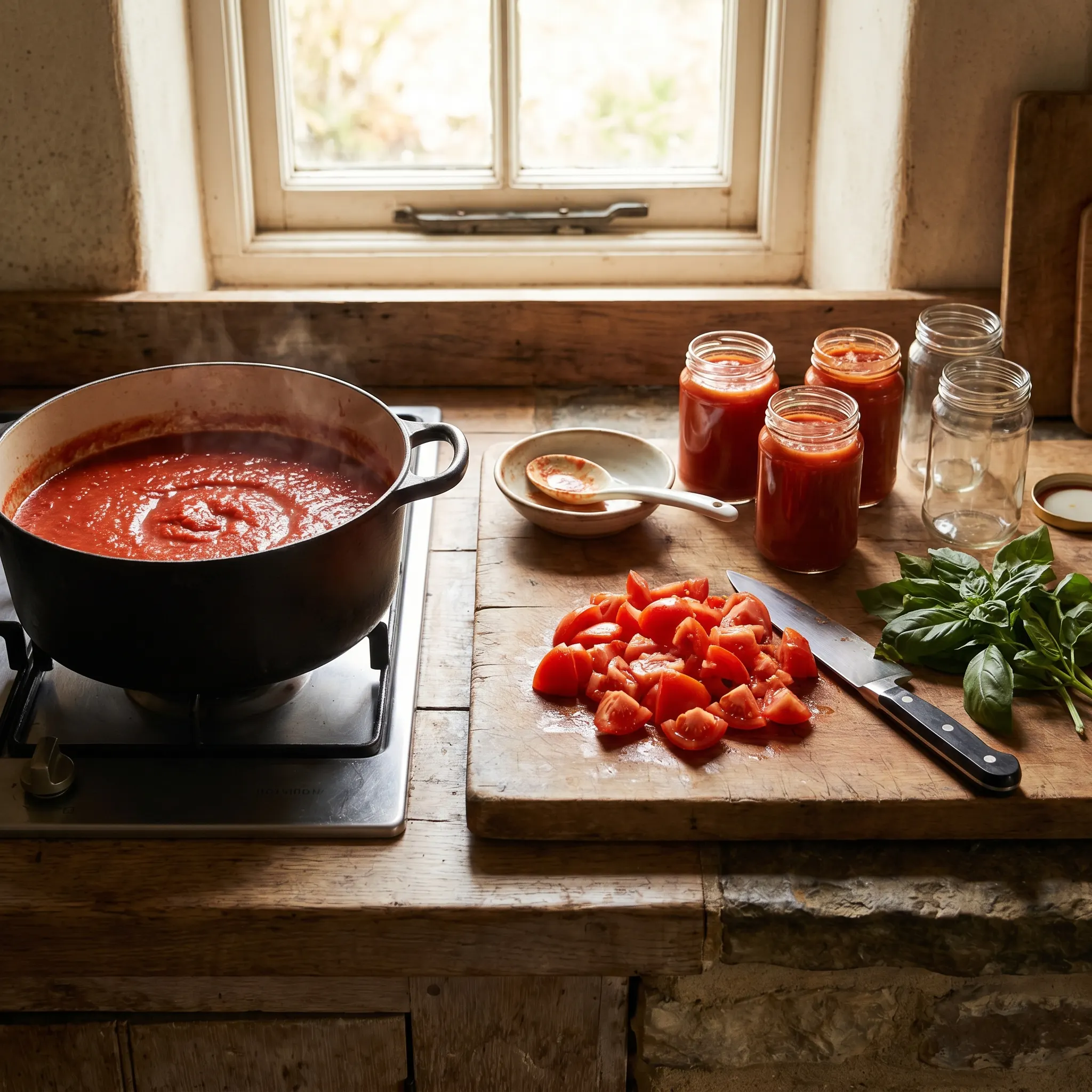
The best tomato dish often begins before a pan is hot. Watery fruit benefits from draining, salting, or reduction. Dense paste tomatoes can handle heat but may need oil and patience to show depth. Thin-skinned cherries collapse quickly and bring brightness when added near the end of cooking. Soft slicers should not be forced into long service when a chilled plate, toast, or a quick grated sauce will protect their aroma.
Tomato Casa encourages cooks to taste in stages. Try a raw wedge, then a salted wedge, then a warmed spoonful if the fruit is headed for sauce. Notice whether sweetness appears immediately or only after water leaves the pan. This habit turns recipes into decisions instead of instructions followed blindly.