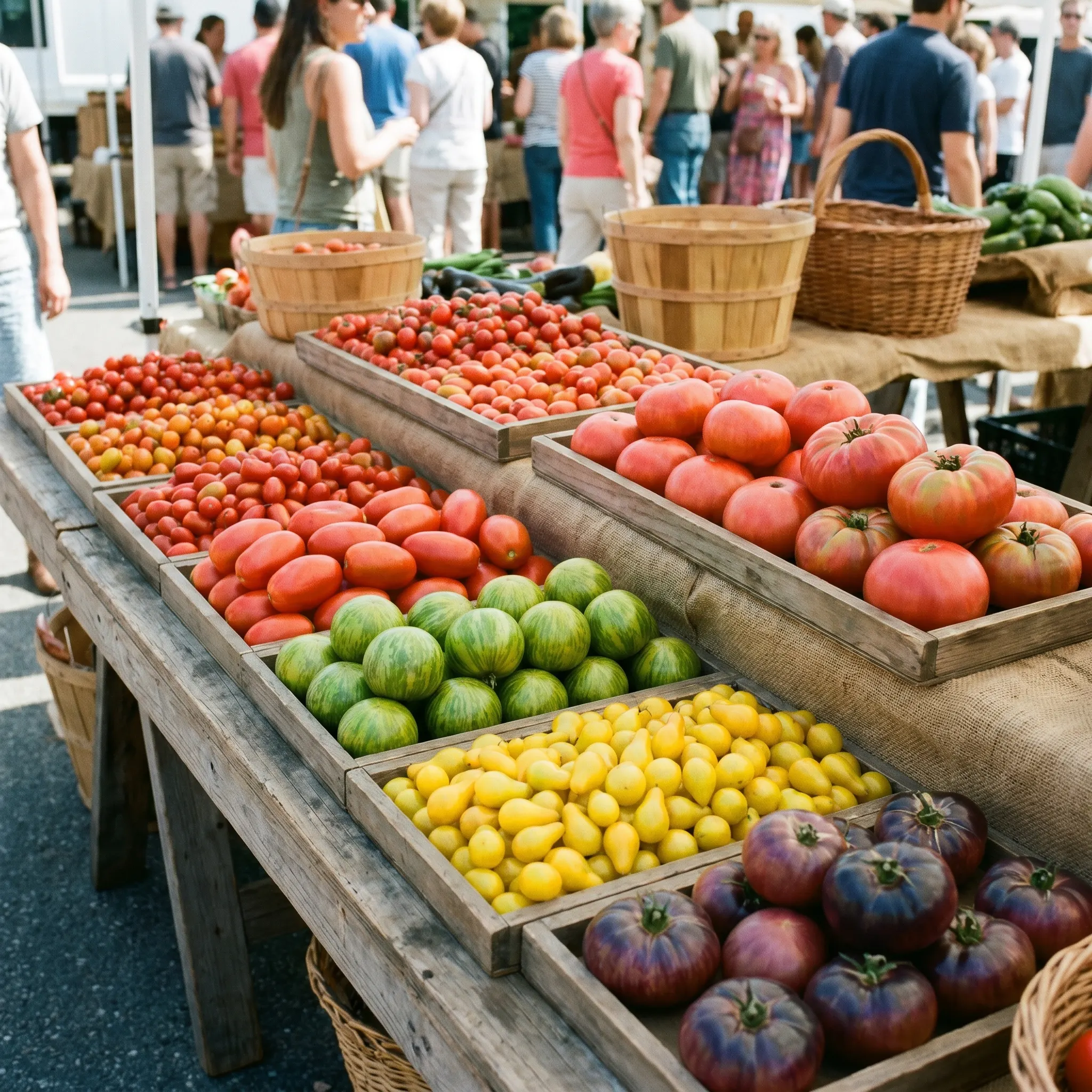
Variety bench
Choose a tomato by what it needs to do after harvest.
Tomato varieties are often sold by romance: old names, unusual colors, and promises of sweetness. Tomato Casa sorts them more practically. A variety earns its place by the way it ripens, the firmness of its skin, the amount of gel it carries, and whether its best flavor arrives raw, roasted, salted, or simmered.
This does not make heirlooms and hybrids enemies. A thick-skinned hybrid can be the right choice for a windy balcony, while a fragile striped heirloom may deserve the best plate of the week. The key is to separate beauty from purpose. Shape tells you about cutting; seed cavity tells you about juiciness; wall thickness tells you about sauce; shoulder behavior tells you when the fruit is ready.